
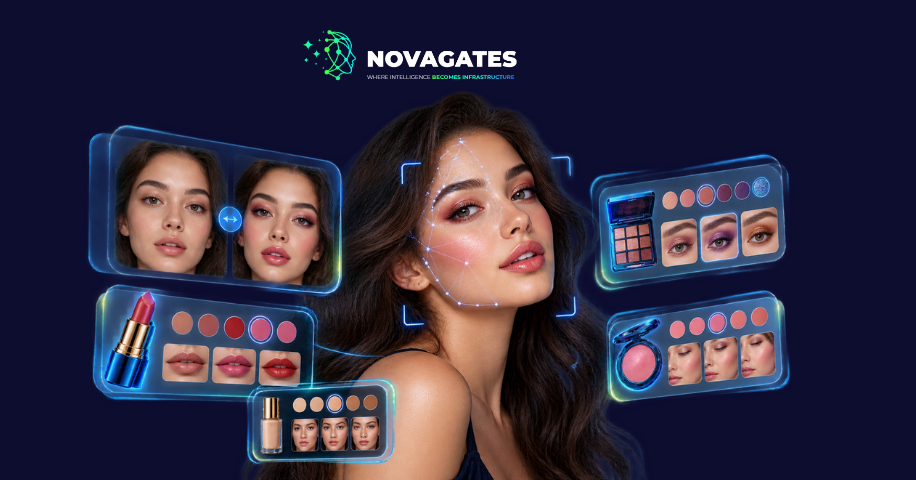
In a beauty store, testing is almost a reflex. A shopper picks up a tester, swatches a lipstick on her hand, checks it in the mirror and decides. Online, none of that exists. She gets a studio photo, a model with a different skin tone and a shade name that means little until the box arrives. Many shoppers simply decide not to risk it.
A virtual makeup tester gives that moment back. It lets shoppers test makeup on their own face, through a phone or computer camera, before they buy. This guide explains what it is, why shoppers want it, how it changes product discovery, how beauty e-commerce teams can use it, and what it means for your numbers.
What Is a Virtual Makeup Tester?
A virtual makeup tester is a digital tool that lets shoppers try makeup on their own face through a phone or computer camera, without touching a physical product. Using face tracking and augmented reality, it shows how a lipstick, foundation, eyeshadow or blush will look on their skin and features in real time, and lets them switch shades instantly.
You will also hear it called an online makeup tester, a digital makeup tester, a virtual cosmetic tester or a virtual beauty tester, and it overlaps with what the industry calls online makeup try-on.
The names differ, but the idea is the same: the shopper tests the product before buying it. It is worth separating it from a shade finder, which recommends a shade from a questionnaire or a selfie. A tester shows the result on the face. The best experiences combine the two, so the shopper gets a suggestion and can see it right away.
Makeup testing technology of this kind rests on three things working together: face tracking that keeps the product in place as the shopper moves, color rendering that reproduces shade and finish believably, and accurate product data so that what appears on screen matches what arrives in the box.
Read More: Virtual Lipstick Try-On for Beauty E-commerce
Why Online Shoppers Want to Test Makeup Before Buying
The biggest reason is uncertainty about shade. Google research, as cited by the e-commerce platform Fynd, found that more than 60% of online beauty shoppers have decided against a purchase because they were unsure which shade would suit them, and 41% have returned a product because the shade was wrong.
For a product where color is the whole point, that is a lot of lost orders and a lot of returned ones.
The pattern also shows up in the Gulf. NIQ's Beauty Decoded study surveyed 1,000 beauty consumers in Riyadh, Jeddah and Dammam and found that 64% buy both online and in store, while only 3% buy exclusively online. NIQ's reading is that shoppers move between channels looking for the same thing, which is less uncertainty and more confidence, and that they want to test textures and compare shades before they commit.
A shopper who tests in a store and then orders online is telling you what the website is missing.
The missing test is a long-standing barrier. An Australian survey by Field Agent, reported by Internet Retailing, found that 76% of shoppers named the lack of a color test as a main reason they buy less makeup online.
The survey is not recent, so treat it as background rather than a benchmark.
Hygiene is the other reason.Put together, shoppers are asking for the same thing in different words: a way to test makeup without taking a risk.
How Virtual Makeup Testing Changes Product Discovery
Online discovery has traditionally been a search-and-read exercise. The shopper filters by category, reads descriptions, compares swatches and hopes for the best. Virtual makeup testing turns it into something closer to the counter: she tries first, then decides what she likes.
That changes behavior in three ways. Shoppers explore shades they would never have picked from a swatch, because trying one costs nothing. They compare finishes and intensity side by side instead of imagining the difference. And they build looks rather than baskets, choosing a lip shade against the eye and cheek products already on their face.
The sample is American and a few years old, but it shows that a digital test is no longer seen as second best by a large share of shoppers.
For brands, there is a second effect. Every test session tells you which shades and products shoppers explore, something a physical tester never reported back.
Virtual Makeup Testers for Beauty E-commerce
For a beauty e-commerce team, the practical question is where the tester sits in the journey. These are the placements that matter most, and what to track in each.
Placement
What the shopper does
What to track
Product page
Taps 'Try it on' next to the product image
Try-on rate, add-to-cart rate of testers vs non-testers
Shade selector
Tests each shade before choosing
Shade switches per session, shade-related returns
Quick add to cart
Moves from the tester straight to the basket
Try-on to cart conversion
Campaign or social landing page
Tests a featured look from an ad or post
Sessions, completion rate, cost per tested session
In-store mirror
Tests without touching a shared product
Share of tests per channel, repeat visits online
Most brands start on the product page of one high-return category, such as lipstick or complexion products, and expand once the numbers justify it. Technically, a tester can be embedded through an SDK or API without rebuilding the store.
Before you commit, test the tool with your own products, under ordinary home lighting, across a wide range of skin tones and on the phones your customers actually use. For the Gulf, also check that the interface works properly in Arabic and right-to-left layouts, and that camera consent and data handling follow local rules such as Saudi Arabia's Personal Data Protection Law (PDPL).
Want to see a virtual makeup tester on your own catalog?
[Try Demo] [CONTACT US]
Benefits of Digital Makeup Testing for Brands
For brand and e-commerce leaders, the benefits come down to a handful of numbers.
Benefit
Why it happens
What to measure
Fewer wrong-shade returns
Shoppers see the shade on their own face before ordering
Return rate by SKU, share of shade-related reasons
More confident purchases
Uncertainty drops at the moment of decision
Add-to-cart and checkout rate
Larger baskets
Shoppers build complete looks across products
Average order value, items per order
Less reliance on physical testers
Digital testing covers part of the sampling
Tester replacement cost, hygiene complaints
First-party insight
Every session shows what shoppers try
Most-tested shades, gaps in the shade range
The honest caveat is that the evidence on conversion is mixed.
The strongest case is therefore the one you build yourself. Run a test for four to six weeks on one category, keep a control group, and compare tester users with non-users on conversion, returns and order value.
A simple way to size the prize before you start: multiply your monthly orders by the share returned because of shade or fit, and by the average cost of a return, which includes shipping, handling and lost product value. That figure is the ceiling of what a tester can recover
Read More: AI Makeup Technology: How It’s Transforming Beauty
The Future of Online Makeup Testing
Expect five developments over the next few years.
The first is a move from testing a product to testing a whole routine. Shoppers will expect to try complexion, eyes and lips together and get guidance on what works with what they already own.
The second is a shift from matching a color to understanding the shopper: skin analysis, undertone and preferences feeding the same experience, so the shade a tester suggests is based on more than a single reading.
Third, the tester will follow the customer across channels. The same profile and test history will work on the website, in the app and on an in-store mirror, which matches how shoppers already move between channels.
Fourth, conversational assistants will sit on top, answering questions in natural language and pointing shoppers to the product they should test next.
Fifth, trust will become a competitive factor. GlobalData's 2025 Q4 survey of 22,613 consumers in 42 countries found that 39% say the digital sophistication of a beauty product or service always or often influences their choice, and the same report notes that smart beauty technology gained prominence at CES 2026.
As adoption grows, shoppers and regulators will ask harder questions about camera data and inclusivity, and the brands with clear answers will be preferred.
Let Customers Test Your Makeup Virtually With Novagates
You do not have to take any of this on trust. The quickest way to judge a virtual makeup tester is to use one.
Novagates builds AI and AR tools for beauty and fashion brands, including Makeup Virtual Try-On and Accessories Virtual Try-on, skin and face analysis, and an SDK for embedding the experience in your own store.
Open the free demo, allow camera access and test makeup on your own face within seconds. While you do, look at the things that decide whether a tester is worth adding to your store: how realistic the color looks under ordinary lighting, how steady it stays when you move, how quickly you can switch between shades, and how it behaves on your phone and on a laptop.
Start with the demo if you want a quick look. Choose the free trial if you want more time with the technology, or book a walkthrough if you would rather talk through your catalog with our team.
[Try demo] [CONTACT US]
Frequently Asked Questions
Can customers test makeup online before purchasing?
Yes. With a virtual makeup tester, customers can try lipstick, foundation, eyeshadow, blush and other products on their own face through a phone or computer camera, switch shades instantly and compare looks before they buy. No physical product is needed, which also removes the hygiene concern of shared testers.
Can virtual makeup testing reduce uncertainty when shopping online?
Yes. Shade and fit uncertainty is one of the main reasons shoppers hesitate or return makeup. A virtual makeup tester lets them see the product on their own face before ordering, which narrows the choice and builds confidence. Results depend on color accuracy and lighting, so brands should measure the effect on conversion and returns in their own store.