AI Face Technology: How Virtual Try-On Is Transforming Beauty & Retail
AI face technology combines artificial intelligence, computer vision, facial analysis, augmented reality (AR), and virtual try-on (VTO) to create personalized digital experiences. In beauty and retail, these technologies can help customers visualize products on themselves and give businesses a more interactive way to connect product discovery with digital commerce.
What Is AI Face Technology?
AI face technology uses artificial intelligence and computer vision to detect and analyze facial features from images or camera feeds.
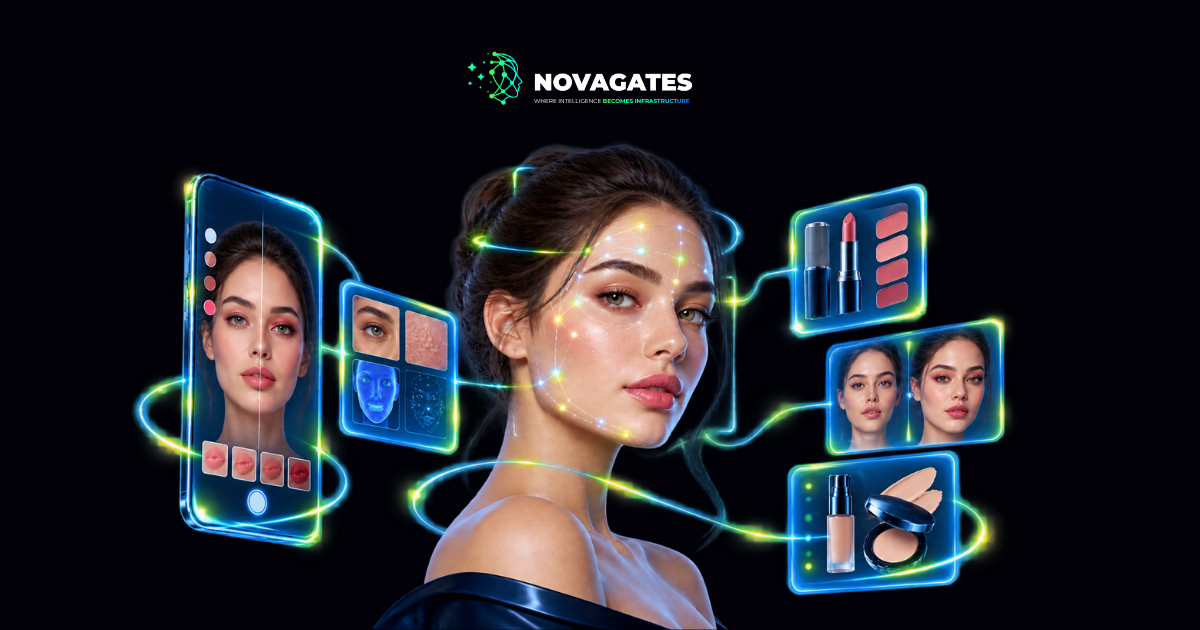
Depending on the application, a system can identify relevant facial regions and landmarks around areas such as the eyes, lips, eyebrows, skin, and facial contours.
This creates a digital understanding of the face that can support different experiences.
For example, facial analysis can contribute to personalized beauty experiences, while AR and virtual try-on technology can digitally visualize compatible products or effects on a user's face.
Rather than treating these capabilities as isolated features, businesses can combine AI, computer vision, AR, and VTO to build a broader technology infrastructure for interactive customer experiences.
How Does AI-Powered Virtual Try-On Work?
AI-powered virtual try-on can combine several technologies, each performing a different role in the experience:
Computer vision identifies the face and relevant visual information.
Facial detection and tracking establish reference points and follow movement.
Artificial intelligence can analyze visual information required by the application.
Augmented reality (AR) overlays compatible digital content onto a real-world image or camera view.
Virtual try-on (VTO) brings these capabilities together so users can explore products or visual effects digitally.
The exact technical architecture varies by application and product category.
The important distinction is that an advanced VTO experience is not simply a static image placed over a photograph. The system needs to understand relevant visual information and render the digital experience appropriately as the user interacts with it.
Why Is Virtual Try-On Important for Beauty and Retail?
Traditional e-commerce gives customers photographs, descriptions, videos, reviews, and product specifications.
But there is still an important question that those assets cannot always answer:
What could this product look like on me?
Virtual try-on helps address this gap by making product exploration more interactive.
Academic research supports the relevance of this experience. A 2024 beauty-industry study examined 238 participants using a virtual try-on application and found that perceived value was positively associated with purchase intention.
Research into AR makeup shopping has also found that factors including fit confidence, immersion, social value and perceived utility influence consumers' intention to use AR applications.
For businesses, this means VTO should not be considered only as a visual effect. It can become part of the digital product-discovery experience.
What Can AI Face Technology Be Used For?
AI face technology can support multiple beauty and retail experiences depending on the implementation.
These can include:
Facial analysis
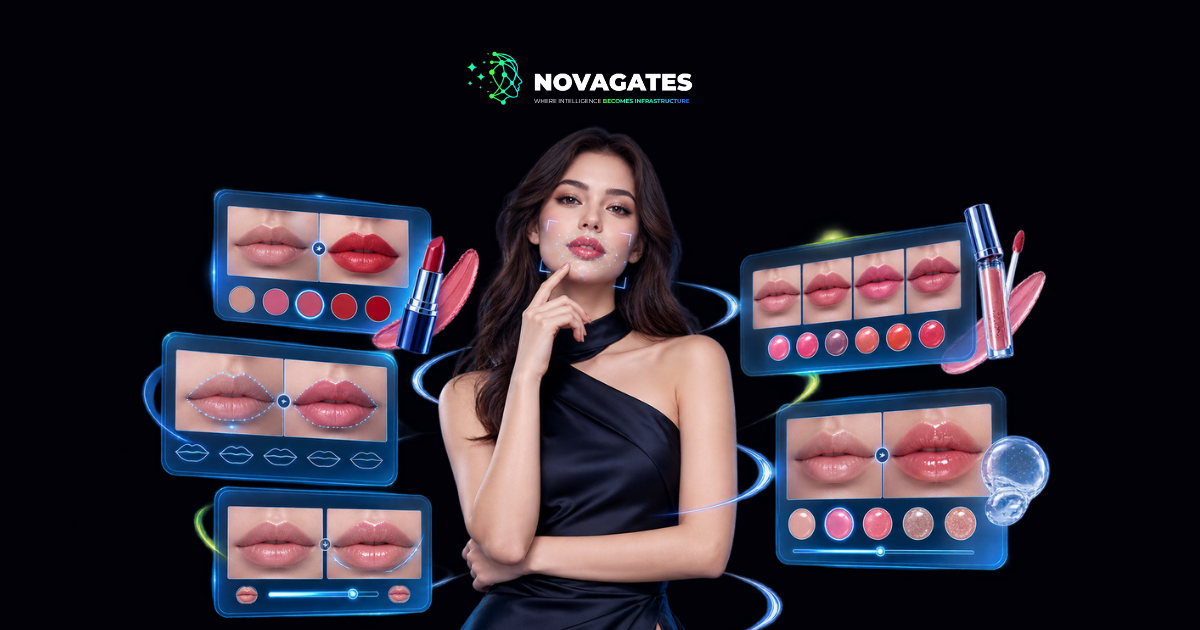
Makeup visualization
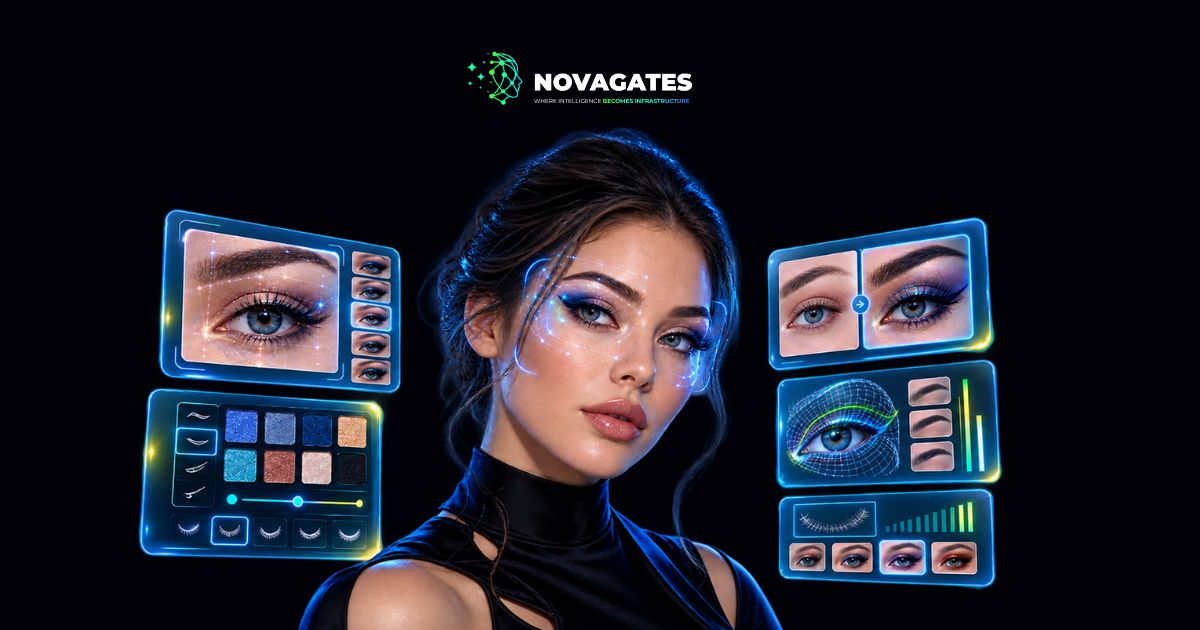
Eye-related experiences
Contact lens visualization
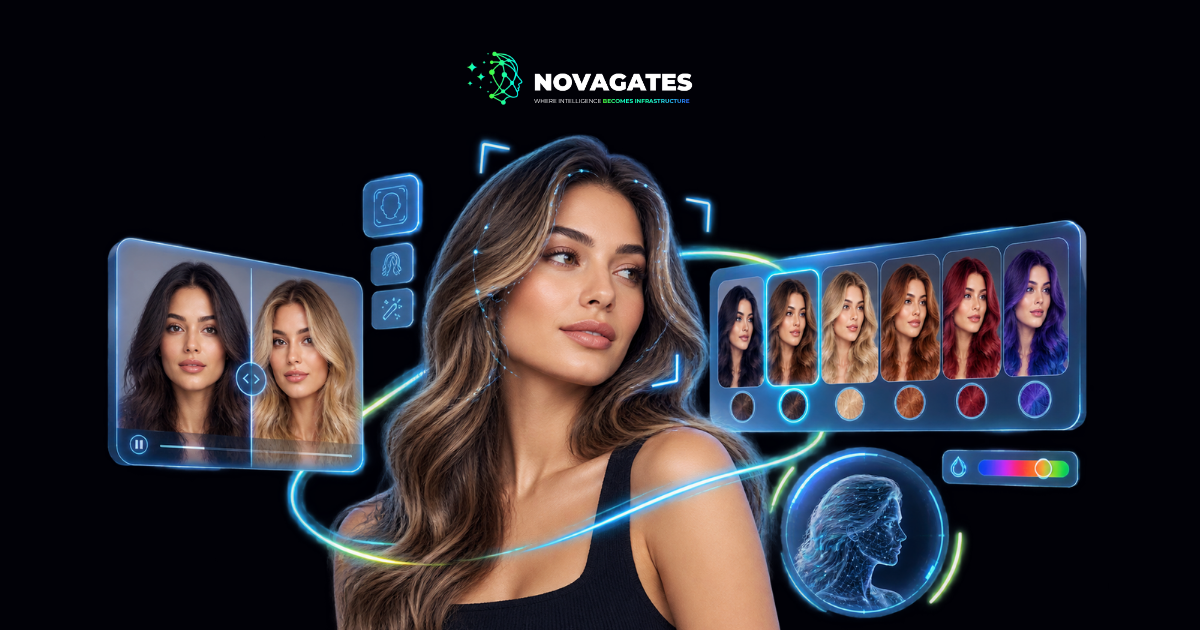
Hair-color exploration
Beauty product discovery
Accessories visualization
Personalized recommendations
Interactive digital consultations
Different categories require different technologies and models, but they can share a common infrastructure based on AI, computer vision, AR, and VTO.
This is particularly relevant for enterprises that want to support multiple digital experiences rather than deploy a separate disconnected tool for every product category.
How Is Virtual Try-On Changing Online Product Discovery?
Virtual try-on changes product discovery from primarily viewing products to interacting with products.
A conventional online customer journey might look like this:
Search → View product → Compare → Purchase
An AI- and AR-enabled journey can introduce another layer:
Search → Explore → Virtually experience → Compare → Decide
The distinction matters because many beauty and style products are highly visual.
Research covering fashion and beauty VTO found that realistic virtual try-on experiences can encourage consumers to explore styles and can positively affect brand-related outcomes. One study involved 500 participants who virtually tried sunglasses or lipstick.
A separate 2024 study of AR in online retail also identified virtual try-on and product visualization as important ways AR can improve product exploration and customer engagement.
What Technologies Power Modern Virtual Try-On?
Virtual try-on is usually not powered by one technology alone.
Artificial Intelligence
AI can support analysis, personalization, recommendations, and interpretation of visual information.
Computer Vision
Computer vision enables systems to interpret visual input from images and camera feeds.
For face-related applications, this may include identifying facial regions and tracking relevant points required by the experience.
Augmented Reality
AR combines digital elements with the user's view of the physical world.
In retail, this makes it possible to visualize compatible digital representations of products while maintaining the context of the customer's own appearance or surroundings.
Virtual Try-On
VTO brings these capabilities into a customer-facing experience where users can explore compatible products digitally before making a purchasing decision.
Together, these technologies create a foundation for more intelligent and interactive commerce experiences.
From a Feature to Technology Infrastructure
One virtual try-on tool can solve one specific customer-experience problem.
Technology infrastructure can support something much larger.
An enterprise may need capabilities for Face, Eyes, Makeup, Hair Color, Lenses, Nails, and Accessories. Each has its own requirements, but they can operate as parts of a connected technology ecosystem.
That is the important shift.
Instead of asking:
“How can we add a virtual try-on feature?”
businesses can ask:
“What technology infrastructure do we need to create intelligent product experiences across our digital ecosystem?”
This approach makes AI and VTO part of a broader digital strategy rather than a standalone marketing feature.
What Is NovaTech by Novagates?
NovaTech is the technology infrastructure layer within Novagates for intelligent digital experiences.
Novagates currently organizes NovaTech capabilities across areas including VTO, AI technology and visualization technology. Its VTO ecosystem includes Makeup, Hair, Accessories, Nails and Lenses, while its AI technology capabilities include areas such as Face and Skin.
The broader objective is to connect technologies such as:
Artificial Intelligence
Augmented Reality
Virtual Reality
Virtual Try-On
Computer Vision
Visualization technologies
This allows enterprises to approach digital product experiences as connected technology infrastructure rather than a collection of isolated tools.
For businesses exploring AI-powered beauty and retail experiences, this infrastructure can provide the technological foundation for more personalized and interactive customer journeys.
Why Does AI Face Technology Matter for the Future of Commerce?
Digital commerce is moving beyond static product catalogs.
Customers increasingly encounter experiences that allow them to interact with products, visualize options, receive personalized information, and make decisions within the same digital journey.
Recent research continues to examine this shift. A 2026 study specifically investigated how AR virtual try-on affects customer experience in cosmetics, demonstrating that AR-enabled beauty experiences remain an active area of commercial and academic development.
AI face technology sits within this broader transformation.
When AI, computer vision, AR, and VTO work together, businesses can create digital experiences that help customers move from simply seeing products to actively exploring them.
For enterprises, the opportunity is therefore larger than virtual try-on alone.
It is about building the technology infrastructure for intelligent digital product experiences.
What is AI face technology?
AI face technology uses artificial intelligence and computer vision to detect and analyze relevant facial features and visual information. It can support applications including facial analysis, personalization, augmented reality, and virtual try-on experiences.
What is virtual try-on technology?
Virtual try-on technology allows users to digitally visualize compatible products or effects before purchase. Depending on the application, VTO can combine computer vision, artificial intelligence, facial or object tracking, and augmented reality.
How are AI and AR used in beauty retail?
AI can support visual analysis and personalization, while AR can render digital products or effects within the user's real-world view. Together, they can support experiences involving makeup, hair color, lenses, accessories, and other compatible beauty categories.
What is NovaTech?
NovaTech is Novagates' technology infrastructure for intelligent digital experiences. Its current ecosystem includes AI, AR, VR, virtual try-on, and visualization capabilities designed to support interactive product and customer experiences.4